
Keeping Outdoor Dogs Cool: Shade, Water and Heat Stroke Signs
How to keep an outdoor dog cool: unlimited water, open shade, cooler exercise times, which dogs are at risk, the signs of heat stroke and what to do first.
Affiliate disclosure: product links on this page go to Amazon or to the maker's own store. As an Amazon Associate we earn from qualifying purchases, at no extra cost to you; links to makers' own stores earn us nothing. No retailer or brand sees our picks before they are published or has any say in them. How we choose.
Give the dog unlimited fresh water and open shade, keep exercise to the early morning and evening, keep it off hot pavement, and bring it indoors when it is very hot. The shade has to be the right kind. Humane World for Animals says tree shade and tarps are ideal because they do not obstruct air flow, and that a doghouse does not provide relief from heat and in fact makes it worse. Know the signs of heat stress before you need them. The American Veterinary Medical Association says any of them means emergency veterinary care.
Setup for hot days
- Water. AVMA: unlimited access to fresh water. Humane World: plenty of fresh, cold water, with ice added in a heat wave.
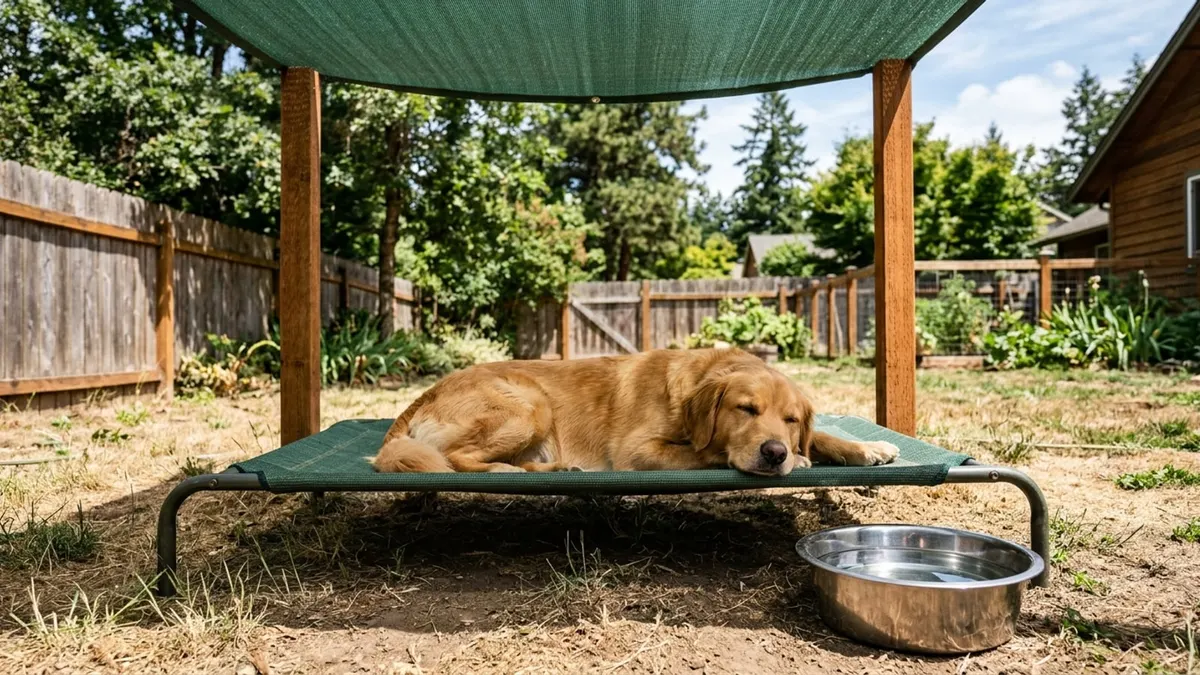
- Open shade. A tree, a tarp or a shade cloth over part of the yard or kennel. The federal rules for licensed kennels require shade for every dog at once, separate from the shelter.
- Not the dog house. A closed box holds heat. Leave it for rain and winter.
- Off the ground. An elevated mesh bed in the shade lets air pass under the dog.
- Water to lie in. AVMA's spokesman, quoted by NPR, suggests a kiddie pool in a shady spot, a sprinkler, or the garden hose with cool water.
- Cooling wraps and mats. Humane World mentions body wraps, vests and mats soaked in cool water.
Fans help less than you would think. Humane World says they do not cool pets as effectively as they cool people.
Exercise and ground
AVMA says to take walks during the cooler hours of the day and to avoid hot surfaces such as asphalt, which can burn paws. Take frequent breaks and carry water for both of you. NPR's veterinary sources give a test: feel the pavement with the back of your hand. If it is not tolerable for you, it is not for the dog. Keep to grass. Humidity counts as well as temperature. A veterinarian quoted by Humane World explains that a dog cools by evaporating moisture from its lungs as it pants, and high humidity hampers that, so body temperature can rise fast.
Dogs at higher risk
The lists from AVMA, ASPCA, NPR and Humane World overlap almost completely.
- Flat-faced breeds such as Pugs, Boxers and Shih Tzus, which cannot pant as effectively.
- Overweight dogs.
- The very old and the very young.
- Dogs with heart or lung disease.
- Dogs with long or dark coats, according to AVMA's spokesman.
- Dogs not conditioned to exercise.
ASPCA says these dogs should be kept cool in air-conditioned rooms as much as possible. A veterinarian quoted by AKC limits small dogs to 10 to 15 minutes above 90 F and says thick-coated breeds should not be out long at that temperature.
Coats and sunburn
Do not shave a double coat to cool a dog. ASPCA says the layers of a dog's coat protect it from overheating and sunburn, and NPR's sources say shaving double-coated breeds raises the chance of both. A trim is fine; ask your veterinarian. Dogs with white or thin coats and pale noses can burn. AVMA's spokesman says to use only sunscreen made for pets.
Never the car
Humane World's figures: on an 85 degree day, the inside of a car with the windows slightly open reaches 102 F within 10 minutes and 120 F after 30. AVMA says never to leave a pet in a car, even in the shade or with the windows cracked.
A hot-day routine
- Walk early, before the pavement warms.
- Fill the water bowls, add ice, and put a second bowl in case the first is tipped.
- Check at midday and again in mid-afternoon that the shade is where the dog is. Shade moves.
- Put the back of your hand on the ground the dog is standing on.
- Bring the dog indoors for the hottest hours, and on any day you would not sit outside yourself.
- Walk again in the evening.
Indoors, AVMA suggests giving a pet different temperature zones so it can choose, and Humane World mentions a cool soak for a dog that does not mind baths. If the power goes out in a heat wave, the dog is in the same trouble you are. Humane World notes that heat with storm-caused outages is when pets are most at risk.
Warning signs
| Source | Signs |
|---|---|
| AVMA | Anxiousness, excessive panting, restlessness, excessive drooling, unsteadiness, abnormal gum and tongue color, collapse |
| ASPCA | Excessive panting or difficulty breathing, raised heart and breathing rate, drooling, weakness, stupor, collapse; seizures, bloody diarrhea and vomit, temperature over 104 F |
| Humane World for Animals | Heavy panting, glazed eyes, rapid heartbeat, difficulty breathing, excessive thirst, lethargy, dizziness, lack of coordination, vomiting, a deep red or purple tongue, seizure, unconsciousness |
If you suspect heat stroke
- Move the dog into shade or an air-conditioned room.
- Apply ice packs or cold towels to the head, neck and chest, or run cool, not cold, water over the dog.
- Let it drink small amounts of cool water or lick ice cubes.
- Take it directly to a veterinarian.
Those steps are Humane World's. AVMA's instruction is shorter: seek emergency veterinary care if you see any of its signs. Do not wait to see whether the dog recovers on its own.
Placement makes a difference to all of this: see where to put a dog kennel. Roofed pens are on kennels with roofs.
Frequently asked questions
How do I keep my dog cool outside?
Unlimited fresh water, open shade from a tree, tarp or shade cloth, exercise only in the cooler hours, no hot pavement, and indoors when it is very hot. A kiddie pool in the shade or a sprinkler helps, AVMA's spokesman says.
Does a dog house keep a dog cool?
No. Humane World for Animals says a doghouse does not provide relief from heat and makes it worse. Tree shade and tarps are better because they do not obstruct air flow.
What are signs of heat stroke in dogs?
AVMA lists anxiousness, excessive panting, restlessness, excessive drooling, unsteadiness, abnormal gum and tongue color and collapse. ASPCA adds seizures, vomiting and a temperature over 104 F.
What should I do if my dog overheats?
Move it to shade or air conditioning, put ice packs or cold towels on the head, neck and chest or run cool water over it, offer small amounts of cool water, and go directly to a veterinarian. Those are Humane World's steps; AVMA says to seek emergency veterinary care.
Should I shave my dog in summer?
Not a double-coated dog. ASPCA says the coat's layers protect against overheating and sunburn, and veterinarians quoted by NPR say shaving double-coated breeds raises the risk of both. Ask your veterinarian about a trim.
Do fans cool dogs?
Not as well as they cool people. Humane World for Animals says dogs respond to heat differently, sweating mainly through their feet and cooling by panting.
How hot is too hot to leave a dog outside?
A veterinarian quoted by AKC limits small dogs to 10 to 15 minutes above 90 F and says thick-coated dogs should not be out long. ASPCA says to keep pets indoors when it is extremely hot, and AVMA that if it is hot for you it is even hotter for your pet.
Sources
- Warm weather pet safety, American Veterinary Medical Association
- How to Keep Pets Safe in High Temperatures, Humane World for Animals
- Hot Weather Safety Tips, ASPCA
- 5 tips to keep your pet safe and comfortable in extreme heat, NPR
- How Long Can You Keep Your Dog Outside?, American Kennel Club
- 9 CFR 3.4: Outdoor housing facilities, Legal Information Institute, Cornell Law School
Cover image: Illustration: Dog Kennel Review (AI-generated)
Related guides
How to Winterize a Dog House: Size, Floor, Door, Bedding, Water
Seven steps to a warm, dry winter shelter, and when to bring the dog in.
Is It Safe to Keep a Dog Outside? What Vets and Welfare Groups Say
The basics an outdoor dog needs, and the limits that override them.
Where to Put a Dog Kennel: Ground, Shade, Wind and Neighbors
Pick the spot first; it decides how comfortable the kennel is.