
Is It Safe to Keep a Dog Outside? What Vets and Welfare Groups Say
Is it safe to keep a dog outside? What AVMA, MSD Veterinary Manual, AKC, ASPCA and Humane World say about shelter, water, weather limits and which dogs stay in.
Affiliate disclosure: product links on this page go to Amazon or to the maker's own store. As an Amazon Associate we earn from qualifying purchases, at no extra cost to you; links to makers' own stores earn us nothing. No retailer or brand sees our picks before they are published or has any say in them. How we choose.
For part of the day, in mild weather, with shade, water, shelter and company: yes, and dogs enjoy it. As a way of life: the American Veterinary Medical Association does not recommend keeping any pet outside for long periods. The American Kennel Club advises bringing dogs in before bedtime, and Humane World for Animals says dogs are happiest when taken out often and kept inside the rest of the time. What follows is what each source says a dog outdoors needs, the weather limits that override any setup, and the dogs that should not be kept out at all.
What the sources say, in their own terms
| Source | What it says |
|---|---|
| AVMA | Does not recommend keeping any pet outside for long periods; if you cannot keep the dog in, provide a warm, solid shelter and unfrozen water |
| MSD Veterinary Manual | Outdoor dogs need a clean shelter, more food in the cold, and companionship from other dogs and frequent human contact |
| AKC | Bring dogs in before bedtime; how long outside depends on the dog's needs, health and breed |
| ASPCA | If it is too cold for you, it is probably too cold for your pet; keep pets indoors when it is extremely hot |
| Humane World for Animals | Never ideal to leave a dog out for long in extreme weather; any dog living outside needs a sturdy, enclosed, raised shelter with bedding |
The basics, every day
- Shelter. MSD: clean, big enough to stand up and turn around, with a solid roof, off the ground, and a flexible door. See dog houses.
- Shade that is separate from the shelter. The federal rules for licensed kennels require both, and Humane World says a doghouse makes heat worse.
- Water. AVMA: unlimited and fresh, and in winter not frozen.
- Food. MSD: twice the calories in cold weather.
- A secure space. A fenced yard, kennel or run that contains the dog and keeps other animals out: see kennel or run.
- Company. MSD lists it as a requirement. A trainer quoted by AKC says a lonely dog may become bored, which can lead to digging, destructive behavior or escape attempts.
Limits that override the setup
No kennel changes the weather. A veterinarian quoted by AKC, Dr. Sarah Wooten, gives working figures while saying there is no one-size-fits-all rule.
| Dog | 60 to 90 F | Below 32 F or above 90 F |
|---|---|---|
| Small, single-coated or hairless | A few hours | No more than 10 to 15 minutes |
| Medium to large with a thick double coat | Longer, with shade and water | Below 32 F: usually 30 minutes to an hour. Not long above 90 F |
| Puppies under eight weeks, Toy breeds | With care | Kept out of extreme weather |
| Elderly or with a health condition | Short, supervised outings | Indoors |
AVMA's limit for cold is simpler: no pet should be left outside for long periods in below-freezing weather. For heat it is that if it is hot outside for you, it is even hotter for your pet.
Dogs bred for the cold
Thick double-coated breeds are the exception people point to, and the sources grant it in part. AKC says healthy arctic breeds can stay outside for an indefinite period on chilly days as long as they are acclimated. A trainer it quotes explains why: the long guard hairs of the outer coat protect against snow and ice and can shed water, and the soft undercoat keeps the dog warm and dry. AVMA draws the line in the same place for every dog. Long-haired and thick-coated dogs are more cold-tolerant, it says, but are still at risk, and no pet should be left outside for long periods in below-freezing weather. The same coats make heat harder. AKC says not to leave double-coated dogs out for long above 90 F.
Dogs that should not be kept outside
The federal rules for licensed kennels list three groups that may not be housed outdoors without a veterinarian's approval: dogs not acclimated to the local temperatures, breeds that cannot tolerate them, and the sick, infirm, aged or young. AVMA names the conditions that make temperature harder to regulate: diabetes, heart disease, kidney disease and hormonal imbalances. For heat, the lists from AVMA, ASPCA and Humane World add flat-faced breeds, overweight dogs and those with heart or lung disease.
The law
Pet owners are governed by state and local law, and it varies widely. Humane World for Animals reports that only a minority of states define adequate shelter in detail, and that seven states do not require an owner to provide shelter at all. Twenty-three states and the District of Columbia have tethering laws, with limits by hours, weather and type of collar. AKC says many municipalities also regulate outdoor space, sometimes requiring upwards of 200 square feet per dog, and that breaking these rules can bring a fine and the loss of the dog. Look up your own state, county and city. The federal kennel standards quoted on this site apply to licensed businesses, and are useful as the most detailed description of minimum outdoor housing that exists.
Tethering
Tying a dog out is the most regulated way to keep it. The federal rules prohibit permanent tethering as a means of housing a dog in licensed facilities, and state limits run from the time needed for a temporary task in California to 14 hours a day in Nevada. If you tether at all, do it briefly, on a harness or flat collar, in your sight: see runner cables.
Signs the dog needs to come in
AKC's are panting, shivering, shaking and extreme fatigue. AVMA's for cold are whining, shivering, anxiety, slowing down, weakness and looking for somewhere to burrow; for heat, anxiousness, excessive panting, restlessness, drooling, unsteadiness, abnormal gum and tongue color and collapse. Seasonal detail is in how to winterize a dog house and keeping outdoor dogs cool.
Frequently asked questions
Can a dog live outside full time?
AVMA does not recommend keeping any pet outside for long periods. If a dog must be outside much of the time, the sources require a weatherproof raised shelter with bedding, shade, unfrozen water, more food in the cold and daily human contact, and bringing the dog in during extreme weather.
How cold is too cold for a dog outside?
AVMA says no pet should be left outside for long periods in below-freezing weather. A veterinarian quoted by AKC gives 10 to 15 minutes below 32 F for small dogs and 30 minutes to an hour for thick-coated breeds.
Which dogs should not be kept outside?
The sick, infirm, old and young, breeds that cannot tolerate the local temperatures such as short-haired dogs in cold climates, and dogs not acclimated to them. That is the federal list for licensed kennels; AVMA adds dogs with diabetes, heart or kidney disease.
What does an outdoor dog need?
MSD's veterinary manual lists a clean shelter big enough to stand up and turn around in, with a solid roof and off the ground; twice the calories in cold weather; and companionship. AVMA adds unlimited fresh water and shade.
Is it illegal to keep a dog outside?
It depends on where you live. States and cities set rules on shelter, space and tethering; 23 states and the District of Columbia limit tethering. Humane World for Animals says seven states do not require shelter at all, and many others define it only vaguely.
How hot is too hot for a dog outside?
A veterinarian quoted by AKC limits small dogs to 10 to 15 minutes above 90 F and says thick-coated dogs should not be out long at that temperature. ASPCA says to keep pets indoors when it is extremely hot.
Sources
- Cold weather animal safety, American Veterinary Medical Association
- Warm weather pet safety, American Veterinary Medical Association
- Table: Special Needs of Outdoor Dogs, MSD Veterinary Manual
- How Long Can You Keep Your Dog Outside?, American Kennel Club
- Cold Weather Safety Tips, ASPCA
- Hot Weather Safety Tips, ASPCA
- As temperatures dropped in Kentucky and Ohio, we gave free doghouses to pups who need them, Humane World for Animals
- How to Keep Pets Warm in Cold Weather, Humane World for Animals
- 9 CFR 3.4: Outdoor housing facilities, Legal Information Institute, Cornell Law School
- Table of State Dog Tether Laws, Animal Legal & Historical Center, Michigan State University College of Law
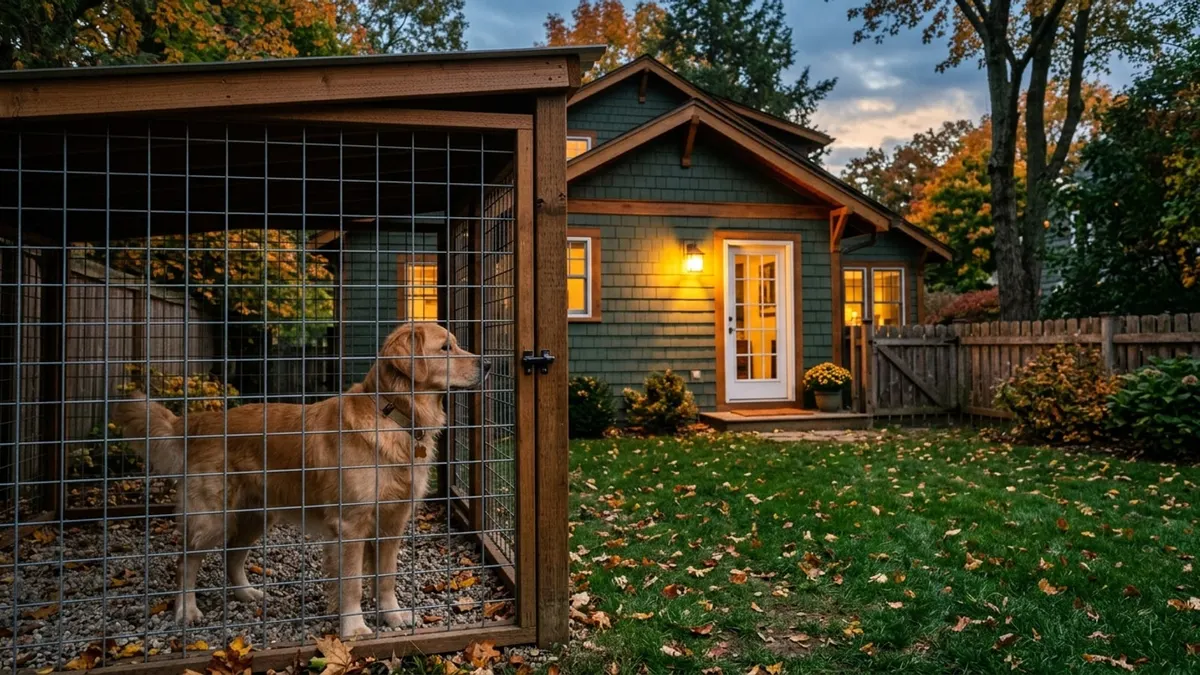
Cover image: Illustration: Dog Kennel Review (AI-generated)
Related guides
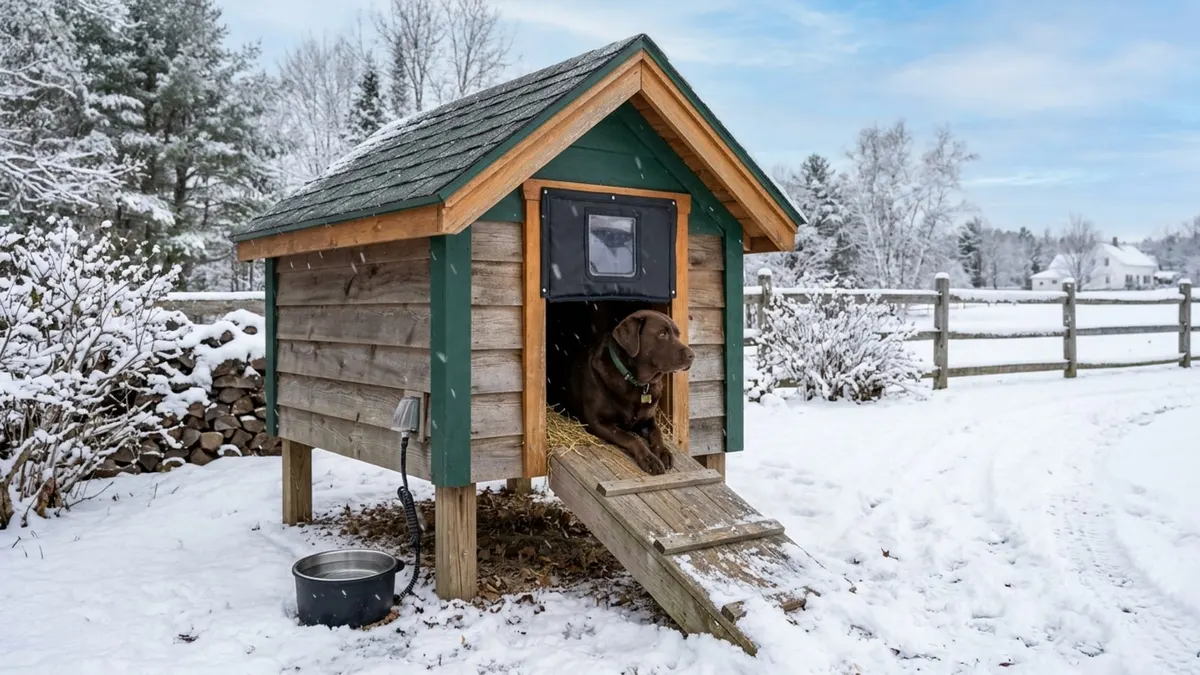
How to Winterize a Dog House: Size, Floor, Door, Bedding, Water
Seven steps to a warm, dry winter shelter, and when to bring the dog in.
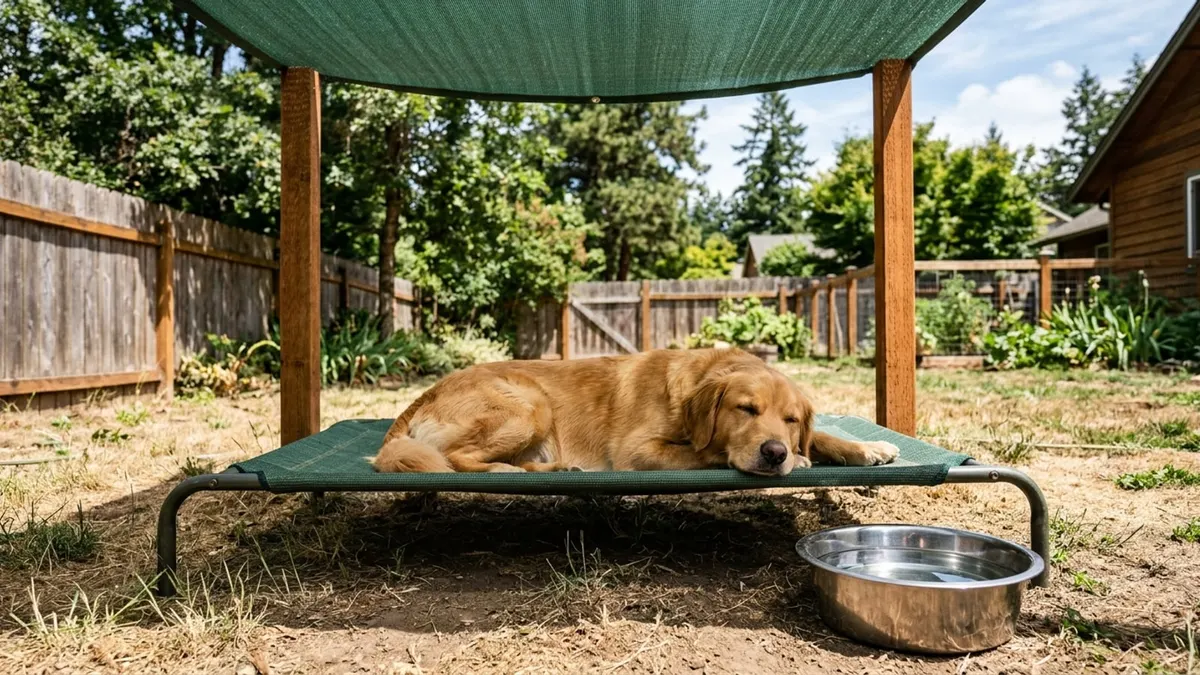
Keeping Outdoor Dogs Cool: Shade, Water and Heat Stroke Signs
Shade, water and the warning signs that mean a vet visit now.
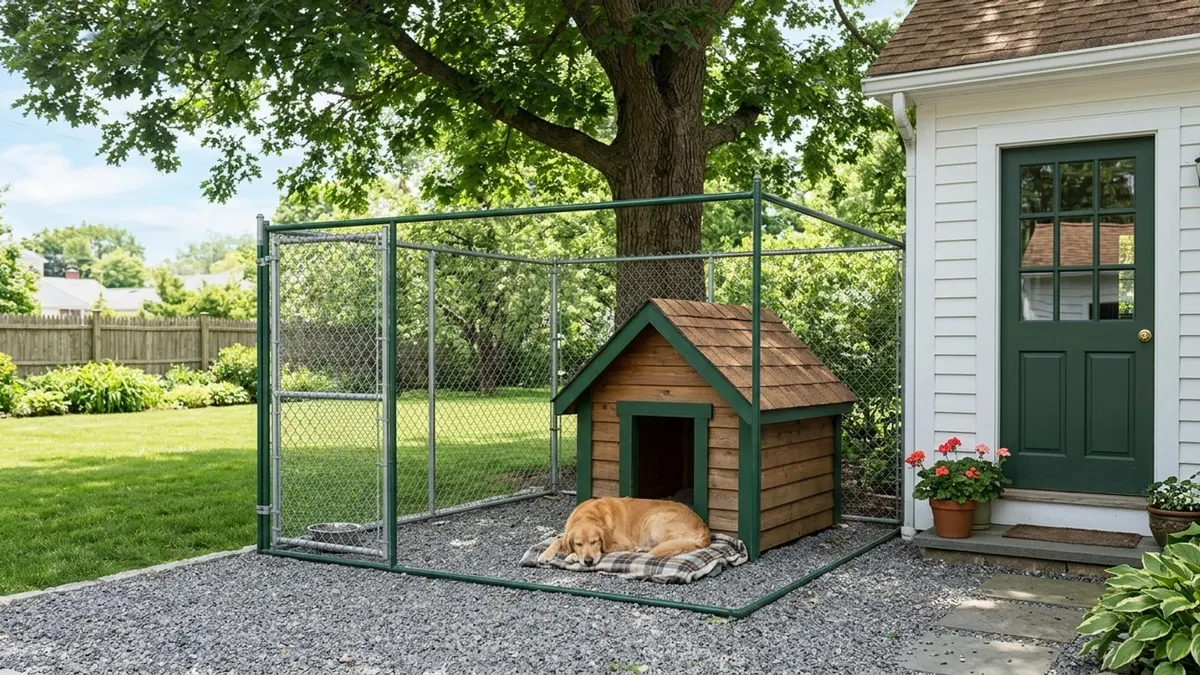
Where to Put a Dog Kennel: Ground, Shade, Wind and Neighbors
Pick the spot first; it decides how comfortable the kennel is.