
How to Set Up a Dog Run: Site, Base, Fencing, Shade and Water
How to set up a dog run: choosing the site, building a drained base, sizing and anchoring the fence, adding shade, shelter and water, and keeping it clean.
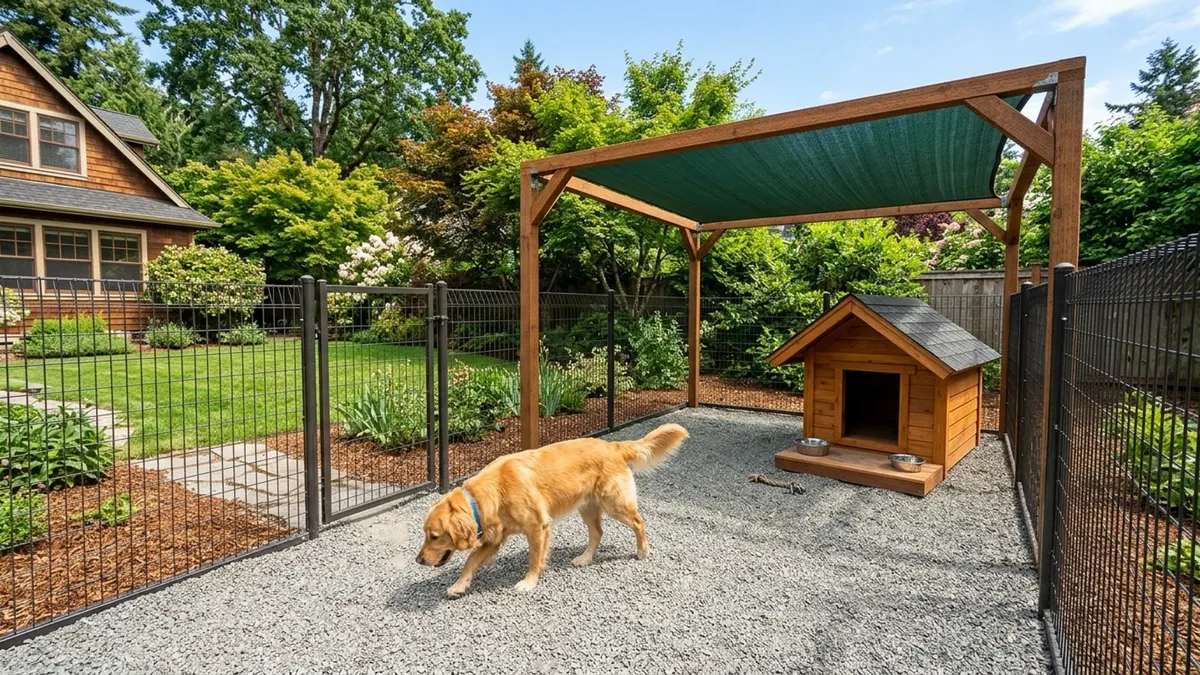
Affiliate disclosure: product links on this page go to Amazon or to the maker's own store. As an Amazon Associate we earn from qualifying purchases, at no extra cost to you; links to makers' own stores earn us nothing. No retailer or brand sees our picks before they are published or has any say in them. How we choose.
Put the run where you can see it from the house, on ground that drains, with shade over part of it all day. Lay a base the dog cannot dig, fence it taller than the dog can jump, and add a shelter with a floor, a water bowl that cannot tip and a gate that latches. Then use it for part of the day. The American Veterinary Medical Association does not recommend keeping any pet outside for long periods. The federal rules for licensed kennels are the only detailed standard for outdoor dog housing, and although they do not bind pet owners, each step below borrows from them.
1. Site
- In sight. A run you can see is a run you check. MSD's veterinary manual says outdoor dogs need frequent human contact, and AKC warns that loneliness leads to digging and escape attempts.
- Drained. The rules say an enclosure must let dogs stay dry and clean. Avoid the low corner of the yard.
- Shaded. Enough shade for every dog at once is required of licensed kennels. Tree shade is ideal, the Humane Society says by way of NPR, because it does not block the air.
- Out of the wind. AVMA says a shelter's door should face away from the prevailing wind, so plan where the dog house will stand.
- Legal. Check setbacks, fence heights and any local rule on space per dog. AKC mentions municipal requirements of upwards of 200 square feet.
More on placement is in where to put a dog kennel.
2. Base
The federal rule for outdoor runs accepts compacted earth, absorbent bedding, sand, gravel or grass as a floor, and requires it to be replaced when there are prevalent odors, disease, insects, pests or vermin. Grass in a narrow run turns to mud along the fence line within weeks. Gravel drains and can be raked and topped up; pavers or a slab hose clean; drainage tiles over either keep paws out of the wet. See kennel flooring. Whatever you choose, the floor has to protect the dog's feet and legs. That rules out sharp stone, and in summer it means shade over any dark surface, since AVMA warns that hot surfaces burn paws.
3. Size and fence
Length is what makes a run a run. The federal minimum for a 36 inch dog is 12.25 square feet, and twice that counts as room to exercise in a licensed kennel; a yard run should be many times larger. The space calculator gives the legal floor for your dog. Count panels with the fence calculator. A modular kit such as the Lucky Dog 2-in-1 builds a 5 by 15 foot run 6 feet high from one box.
- Height. Above what the dog can jump or climb. The federal height rule, 6 inches over the dog's head, is for roofed enclosures; an open run needs far more.
- No sharp points or edges, as the rules require. Check cut wire ends and ties.
- A gate that latches, opening inward if you can, so a dog pushing on it closes it.
- Dig-proofing. Run the base to the fence line, or bury the bottom edge. Listings rarely include anchors.
Two dogs need a run sized for both. The federal rules add each dog's minimum together and require dogs that share an enclosure to be compatible, and MSD's veterinary manual says dogs housed together need enough space for all of them or separate shelters. In practice that means two beds and two bowls, placed apart.
4. Shelter, shade and water
For outdoor housing the federal rules call for a shelter with a roof, four sides and a floor, large enough for the dog to sit, stand, lie down and turn around, with a windbreak and rain break at the entrance. They call for a separate area of shade as well. MSD's veterinary manual puts the same thing in plain words: a clean shelter big enough to stand up and turn around in, with a solid roof, off the ground, and a flexible door to keep rain and snow out. Houses are compared on insulated dog houses.
In cold weather the rules require clean, dry bedding in the shelter below 50 F and more of it at 35 F or lower. AVMA says water must be unfrozen, by changing it often or using a heated bowl. In hot weather, AVMA asks for unlimited fresh water and shade. Do not count the dog house as summer shade: the Humane Society, quoted by NPR, says a doghouse makes heat worse.
5. Keep it clean
- Pick up waste daily.
- Hose hard surfaces and rake gravel; replace bedding when it is damp or dirty. AVMA says a shelter's bedding should be thick, dry and changed regularly.
- Empty and refill the water every day.
- Walk the fence weekly. The rules say enclosures must be kept in good repair.
When not to use it
The federal rules keep some dogs out of outdoor housing unless a veterinarian approves: those not acclimated to the local temperatures, breeds that cannot tolerate them, and the sick, infirm, old and young. For any dog, AVMA says no pet should be left outside for long periods in below-freezing weather, and ASPCA says to keep pets indoors when it is extremely hot. A veterinarian quoted by AKC limits small dogs to 10 to 15 minutes below 32 F or above 90 F. If a fence is not possible, read kennel, run or trolley before buying a tether.
Frequently asked questions
What is the best base for a dog run?
One that drains and can be cleaned. Federal rules for licensed kennels allow compacted earth, sand, gravel or grass in outdoor runs, replaced when odors or pests take hold. Gravel, pavers or drainage tiles last longer than grass in a narrow run.
How big should a dog run be?
As long as your yard allows. The federal minimum for licensed kennels is 12.25 square feet for a 36 inch dog, and twice that counts toward exercise; some municipalities require upwards of 200 square feet per dog, according to AKC.
How tall should a dog run fence be?
Taller than your dog can jump or climb. Modular kennel panels are commonly 6 feet. The federal rule of 6 inches above the dog's head applies to roofed enclosures, not open runs.
Does a dog run need shade?
Yes. Licensed kennels must provide enough shade for every dog at once, and AVMA says dogs outside need access to shade and unlimited fresh water. Tree shade or a tarp that lets air through is best in heat.
Does a dog run need a dog house?
If the dog is out in rain, wind or cold, yes: a shelter with a roof, sides and a floor, off the ground, big enough to stand up and turn around in. In heat it is not a substitute for open shade.
How do I stop my dog digging under the run?
Carry the base to the fence line or bury the bottom of the fence, and give the dog more company and exercise. AKC says boredom and loneliness lead to digging and escape attempts.
Sources
- 9 CFR 3.6: Primary enclosures, Legal Information Institute, Cornell Law School
- 9 CFR 3.4: Outdoor housing facilities, Legal Information Institute, Cornell Law School
- 9 CFR 3.8: Exercise for dogs, Legal Information Institute, Cornell Law School
- Cold weather animal safety, American Veterinary Medical Association
- Warm weather pet safety, American Veterinary Medical Association
- Table: Special Needs of Outdoor Dogs, MSD Veterinary Manual
- 5 tips to keep your pet safe and comfortable in extreme heat, NPR
- How Long Can You Keep Your Dog Outside?, American Kennel Club
- Hot Weather Safety Tips, ASPCA
Cover image: Illustration: Dog Kennel Review (AI-generated)
Related guides
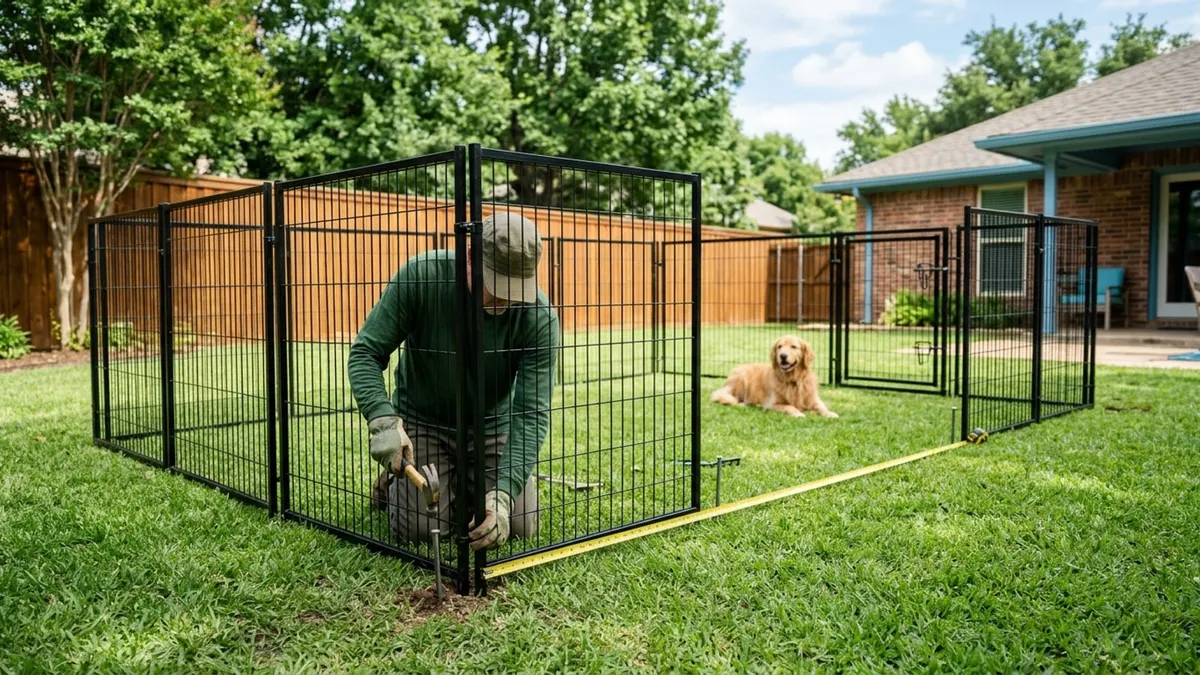
Dog Run Fence Calculator: Panels, Gates and Area for Your Run
How many panels a rectangular run takes, and how big it really comes out.
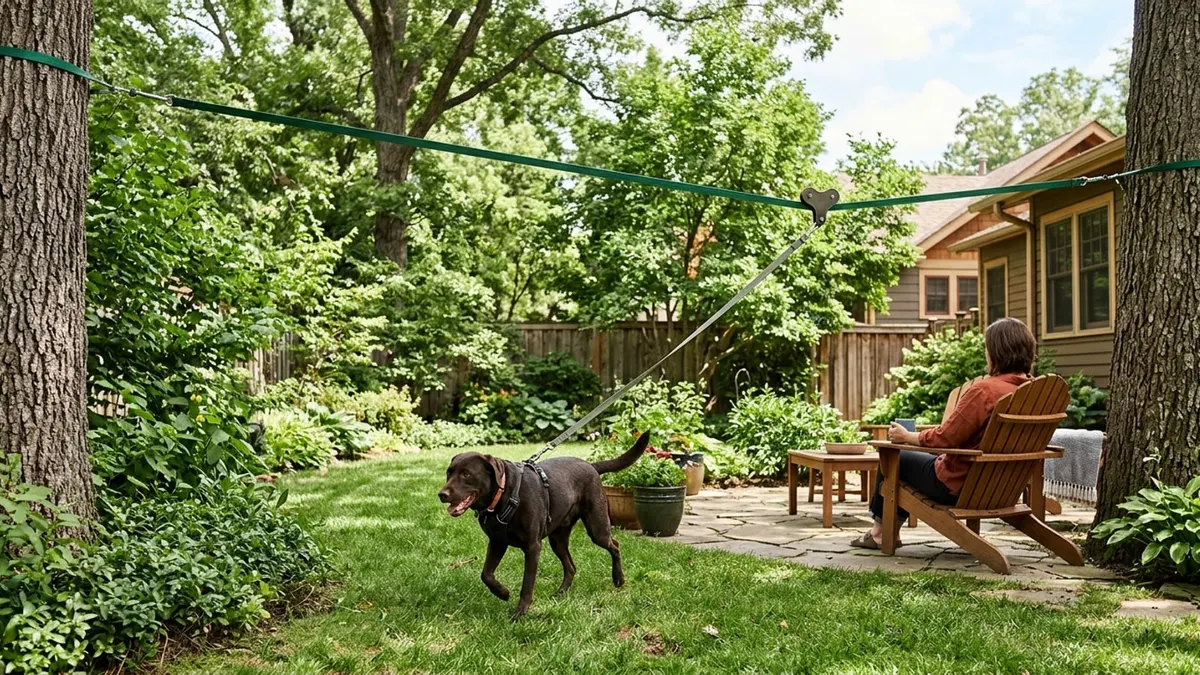
Dog Runner Cables: Overhead Trolley Systems for Supervised Yard Time (2026)
Overhead trolleys that give room to roam with fewer tangles than a stake.
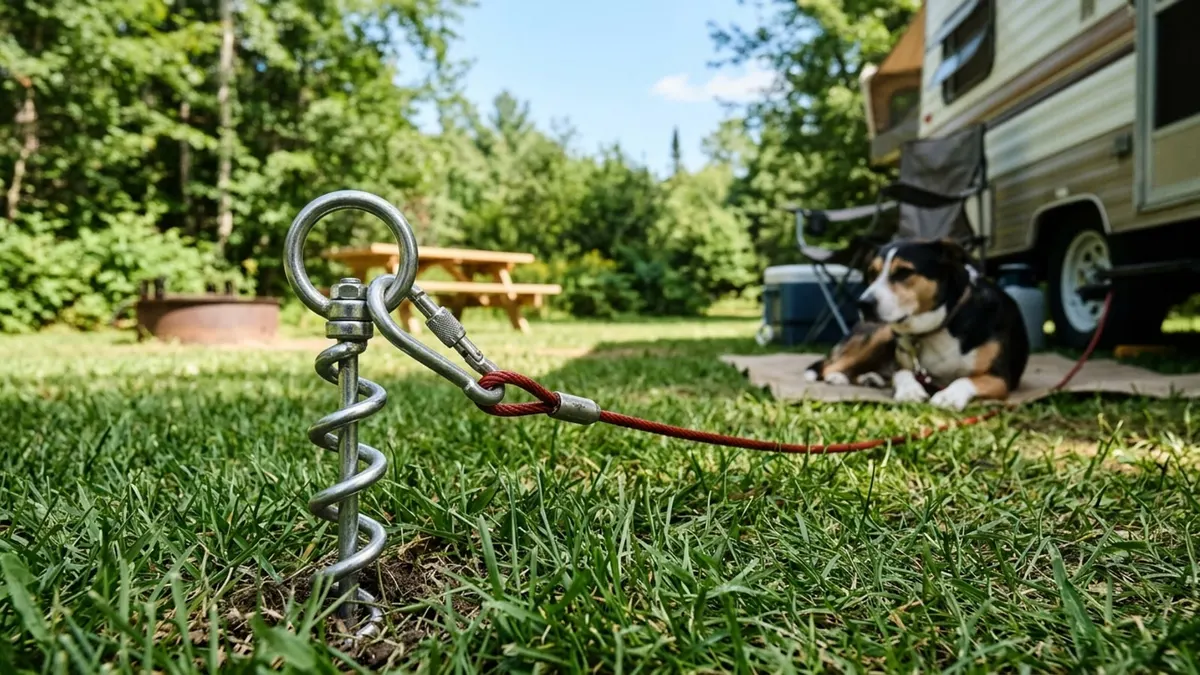
Dog Tie-Out Stakes: Spiral and Swivel Stakes for Camping and the Yard (2026)
Stakes that hold in sand, clay and rock, and how to use them safely.